
Standard 5
Standard 5: Assess, provide feedback and report on student learning
5.1 Assess student learning
5.2 Provide feedback to students on their learning
I believe that I have a good level of professional knowledge and understanding about assessing, providing feedback and reporting on student learning. I cite the following example and accompanying evidence of demonstration of practice that aligns to the Australian Professional Standard of Teaching 5; assess, provide feedback and report on student learning. Over my three week Exploration practicum I had ample opportunity to apply my professional knowledge, understanding and skills that I had gained both over the course of my university studies and time spent engaging in classroom observation.
I was required to plan and implement a series of 4 lessons on probability, including event probability, spinners, and dice. The lesson series culminated with a test on the content covered over the lessons that was implemented and assessed by myself.
Throughout this lesson series I used a range of assessment strategies to assess student learning. In the first lesson on event probability, I included a general introduction and probability line activity to diagnose students’ understanding of probability. Diagnostic assessment is an invaluable resource in the classroom as it allows for the teacher to understand the prior knowledge of the students (Bejar, 1984). I was able to use this information to inform my future teaching as I had gained sufficient knowledge about the students’ abilities; my next lesson started with a clarification of some of the concepts covered in the first lesson. I documented all of these marks, as well as the marks from the rest of the activities, and was able to keep track of how each student was going as well as how the class was going as a whole. I would also regularly ask questions (and not just to students who put their hands up) to check on student understanding, using formative assessment to help guide the lesson. Formative assessment is a useful tool for keeping learning sequences meaningful and on track (Nicol & Macfarlane-Dick, 2006). I would then provide verbal feedback that would allow the whole class to learn from the question asked. As well as this, I worked to mark and provide feedback for students work as quickly as possible in order to allow them to benefit from it as much as possible. At the end of the unit of work, a test was given, and this summative assessment allowed me to report back to my mentor teacher as well as provide her with a snapshot of the students’ understanding at the end of the unit of work. Summative assessment allows teachers to assess student understanding at the culmination of a unit of work (Black, 1993). I recorded all the marks throughout the lesson series which allowed for a quick reference and a good snapshot of how the class was going.
My application of a number of assessment strategies resulted in positive learning outcomes. Students developed an understanding of probability and I was able to adjust the lessons to allow for the most effective teaching and learning. Through the use of assessment techniques, students received constant feedback and assistance in improving their understanding.
References
Bejar, I. I. (1984). Educational diagnostic assessment. Journal of educational measurement, 175-189.
Black, P. J. (1993). Formative and summative assessment by teachers.
Nicol, D. J., & Macfarlane‐Dick, D. (2006). Formative assessment and self‐regulated learning: A model and seven principles of good feedback practice.Studies in higher education, 31(2), 199-218.
TheLeewardChannel,. (2010). Why is Assessment Important?. YouTube. Retrieved 20 October 2016, from https://www.youtube.com/watch?v=D9PKAEIR3QM

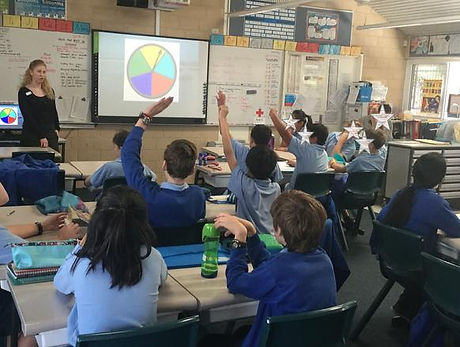
Asking questions and responding to the students' answers is one way to provide verbal feedback. Photo by M Geller
It is important to keep a tidy record of student marks for future reference. Photo by M Geller.
Louise Yarnall of SRI International explains the importance of designing relevant and appropriate assessment for your students.
Property of TheLeewardChannel.